Your cart is currently empty!
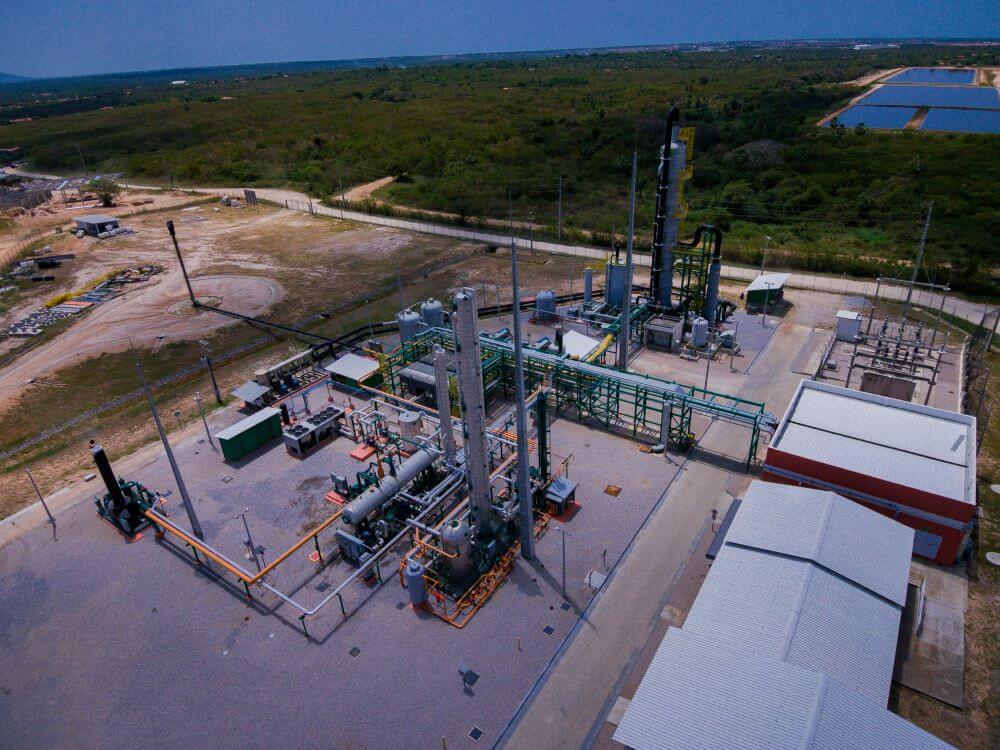
Oeste de Caucaia Landfill
Project Description
This project supports collection of landfill gas at a municipal landfill near the city of Fortaleza in the state of Ceará, Brazil. As organic matter like food waste decomposes, the landfill emits landfill gas, which is primarily methane. The project reduces emissions by (i) capturing landfill gas that would, under normal circumstances, be emitted to the atmosphere and (ii) by using it to produce natural gas. Captured landfill gas is sent to an upgrading facility and then injected into Companhia de Gás do Ceará’s natural gas distribution grid, which then displaces other natural gas that would otherwise be used.
Key Information
Developer
GNR Fortaleza Valorização de Biogás Ltda.
Project Type
Landfill Gas Capture
Impact Type
Avoided Emissions
Methodology
ACM0001 v15
Verifier
KBS Certification Services
Project Lifetime
2016 – 2023
Oxford Category
Oxford Type 1—Technology-based Reductions
Due Diligence
CNaught maintains a very high quality standard for all projects in the portfolios we manage. To ensure that a project meets this standard, we perform due diligence that’s backed up by third-party ratings agencies’ independent due diligence.
Additionality:
This project has very high additionality, meaning it is very unlikely that this project activity could have occurred in the absence of carbon funding. Landfill gas capture programs were very rare in Brazil when the project began. As part of our due diligence process, we reviewed local regulations and the project’s financial barrier analysis and found that this project has both strong financial and regulatory additionality. Calyx Global has also rated this project highly, in part because of its additionality.
Over-Crediting:
This project has a low risk of over-crediting due to the fact that its emissions reductions are a direct measurement of the amount of methane captured and either combusted or used for energy. However, Calyx Global did cite that the project used a default value of 10% natural oxidation in their baseline calculation, which could result in slightly increased emissions reductions calculations. Natural oxidation is the process in which methane can sometimes permeate the cover sealing the landfill and migrate upwards where it is oxidized and converted into CO2. If projects use an oxidation factor that is too low, they risk over-calculating the amount of methane they capture. Based on a literature review of methane emissions in Brazilian landfills, we found that the actual oxidation rate could be as high as 40%1. While this could lead to over-crediting, we found that the project is also using a highly conservative default methane warming factor, which would more than counteract the effect of a lower default oxidation factor. Overall, we believe that this project is unlikely to be over-credited and may even be under-credited.
Durability:
This project activity is highly durable as its emissions reductions are considered permanent, since the methane reductions cannot be reversed. There is also no risk that the project activity would lead to the creation of new landfills and thus additional methane emissions.
Double-Counting:
The project credits have a very low risk of being double counted. This project was initially registered and implemented under the Clean Development Mechanism (CDM) before being transferred to Verra. We carefully reviewed all credit issuances under both CDM and Verra to ensure that previously issued credits are not counted under both mechanisms. We found that the project was very diligent in reporting all credit issuances and that there is no risk of double-counting.
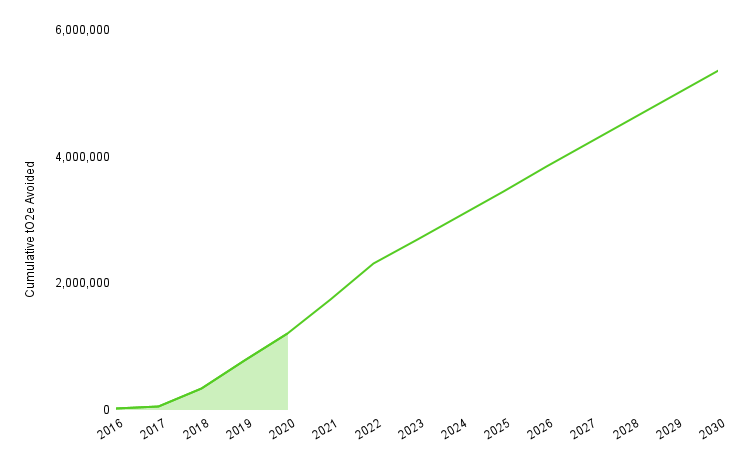
As the project continues to operate, its climate impact is continuing to grow! Figure shows the cumulative carbon dioxide emissions that this project has avoided so far, shaded in green. Even though the project’s current crediting period ends in 2024, the project plans to continue to operate for many years beyond that. Note: Unshaded area represents the emissions reductions the project estimates it will avoid. Projects don’t issue credits based on these estimates, credits are issued once they receive verification of their avoided emissions. Verification can take a long time to do, so there is often a lag between the current year and the most recent year that they issued credits. All data post 2023 is interpolated.
Beyond Carbon
Community and biodiversity co-benefits
This project provides significant community, health, and sustainable technology benefits.
Community: This project has trained and hired local residents to help operate its facilities, supporting the local economy while also ensuring that the project runs smoothly. It is also providing local households with a more sustainable energy source.Human & Environmental Health: This project prevents contamination of local water supply and helps improve air quality. The project also prevents the risks of potential fires or explosions by capturing the methane produced by the landfill. The project, however, is not directly tracking these contributions and therefore does not report any SDGs related to these topics.Sustainable Technology: This project introduces an important sustainable technology to Brazil. Brazil is the fifth-largest emitter of methane in the world and the majority of its emissions come from its landfills, the vast majority of which have limited to no environmental controls1. This project, as well as other early landfill gas projects in Brazil, helped introduce this clean technology to Brazil, and has supported the scaling of implementation throughout the country in recent years.
Risk of Reversal
This project has no risk of reversal because its avoided emissions are not subject to being undone.
Registry & Verification
Third Party Labels
Project Location
Project data sourced from CNaught carbon marketplace. Information may be updated periodically.