Your cart is currently empty!
Katingan Mentaya Conservation
Project Description
The Katingan Mentaya Conservation project protects and restores 149,800 hectares of peatland ecosystems in Indonesia. The surrounding land was drained and converted to palm and other plantations, and the project prevents the protected area from the same fate. The are is a vitally important and dense carbon sink. While peatlands represent only 0.3% of the earth’s surface, their destruction contributes between 2-5% of annual anthropogenic greenhouse gas emissions. Katingan is one of the highest-regarded, large-scale avoided deforestation projects in the world.
Key Information
Developer
PT. Rimba Makmur Utama (PT. RMU)
Project Type
Avoided Deforestation
Impact Type
Avoided Emissions
Methodology
VM0007
Verifier
SCS Global Services
Project Lifetime
2010 – 2070
Oxford Category
Oxford Type 2—Nature-based Reductions
Due Diligence
CNaught maintains a very high quality standard for all projects in the portfolios we manage. To ensure that a project meets this standard, we perform due diligence that’s backed up by third-party ratings agencies’ independent diligence.
Additionality
This project has high additionality, meaning it is very unlikely that this project activity could have occurred in the absence of carbon funding. Without the project, the forests would have been harvested and the peatlands drained, burned, and converted into acacia plantations for paper production and other industrial uses. There is no evidence of any regulations or financial incentives for the project activity. All ratings agencies agree that this project is highly additional, and Calyx Global even noted that Katingan is “among our highest rated REDD / Avoided Deforestation projects” because it is providing such critical forest protections.
Over-Crediting
This project has a low risk of over-crediting, which both BeZero and Sylvera attest to in their ratings. Calyx Global and Renoster consider that risk to be slightly higher, as forest conservation projects typically have some calculation risk associated with their baseline calculation methods. We reviewed this project’s baseline estimation methods and found that their baseline was conservatively calculated and should minimize the project’s risk of being over-credited.
Durability
This project activity is durable as we are confident in its ability to provide permanent emissions reductions. Calyx Global and Renoster both give this project a medium risk score due to fire risk that could reverse the emissions reductions of the project. During our due diligence process, we found that the project has heavily invested in fire prevention and mitigation, which we believe is sufficient to minimize the project’s fire risk.
Double-Counting
The project credits have a very low risk of being double counted. There are no regulatory obligations being met by the project activity and the project’s registry, Verra, has mechanisms in place to ensure that the project is not registered in any other programs. We also confirmed that the project does not overlap with any other REDD projects to ensure that its conservation credits are not claimed by other projects.

The project is in an area with very high deforestation pressure, as the majority of the surrounding area has experienced heavy forest loss. The minimal forest loss in the project area shows that the project has been successful at preventing illegal deforestation.
Beyond Carbon
Community and biodiversity co-benefits
This project delivers significant community, biodiversity, and environmental benefits.
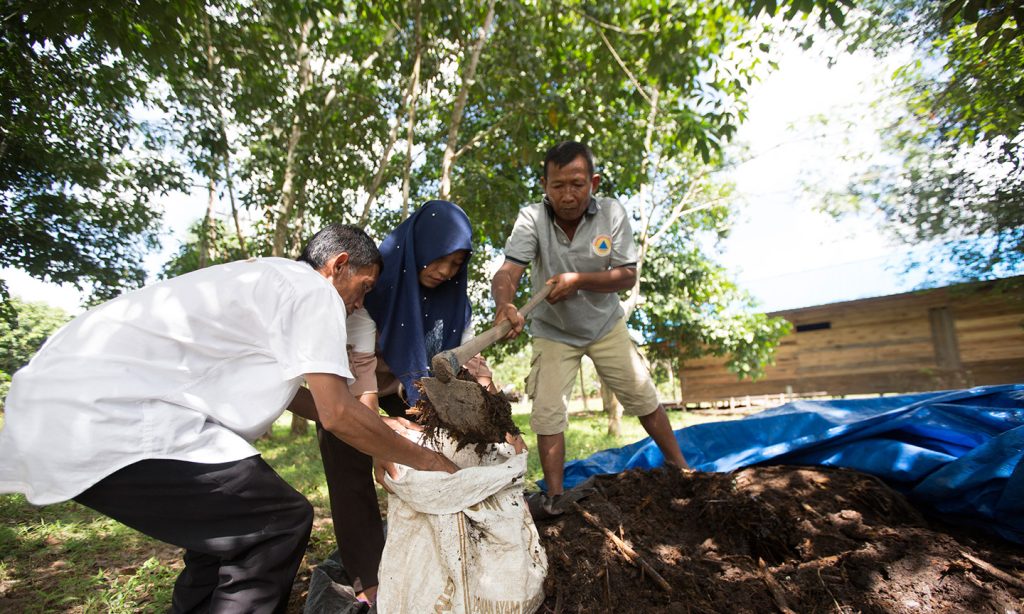
Community: This project provides several sustainable livelihood opportunities for the local community including microfinance programs, agricultural training, and support for small businesses. It also invests in community education and healthcare initiatives, improving overall quality of life. The project also engages community members in forest protection and sustainable resource management, fostering a sense of ownership and environmental stewardship.
Biodiversity: This project protects a vast area of peat swamp forest, a critical habitat for numerous species. This includes endangered wildlife such as orangutans, proboscis monkeys, and Sunda pangolins. By preventing deforestation and maintaining the integrity of the ecosystem, the project preserves biodiversity at both species and landscape levels.
Environmental: This project supports scientific research and monitoring programs, furthering our understanding of tropical peatland ecosystems and their conservation.
Risk of Reversal
Nature-based projects like this one face some risk of reversal. Carbon storage may be affected by natural hazards such as wildfires, flooding, and escalating climate change impacts. Additionally, human-driven factors such as changes in land use or local governance structures can also impact carbon storage.
Registry & Verification
Third Party Labels
Project Location
Project data sourced from CNaught carbon marketplace. Information may be updated periodically.