Your cart is currently empty!
Istanbul Landfill Gas to Electricity
Project Description
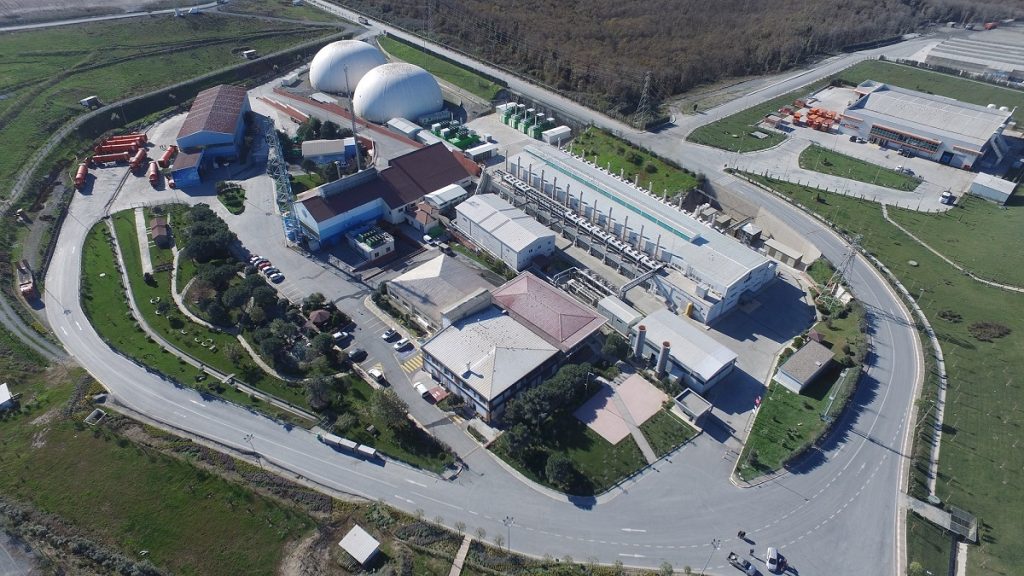
This project supports collection of landfill gas and generation of more than 51MW of electricity at the Odayeri and Komurcuoda landfill sites near Istanbul in Turkey. Like most landfills, these sites throw off methane as some of the waste decomposes. Credits are generated from two pieces of the project: (1) avoiding the emissions of methane (a potent greenhouse gas) into the atmosphere and (2) using the power generated from the methane (natural gas) to displace dirtier coal-fired power coming from the electric grid. The project clearly required carbon revenues to achieve these two goals and therefore generates high-quality carbon offsets.
Key Information
Developer
Ortadoğu Enerji
Project Type
Landfill Gas Capture
Impact Type
Avoided Emissions
Methodology
ACM0001
Project Lifetime
2009 – 2023
Oxford Category
Oxford Type 1—Technology-based Reductions
Due Diligence
CNaught maintains a very high quality standard for all projects in the portfolios we manage. To ensure that a project meets this standard, we perform due diligence that’s backed up by third-party ratings agencies’ independent due diligence.
Additionality:
This project’s first crediting period has high additionality, meaning it is very unlikely that this project activity could have occurred in the absence of carbon funding. The project conducted a thorough investment analysis that incorporated all relevant government incentives, conclusively showing that without carbon revenue, the project would not have been financially feasible. Landfill gas capture programs were very rare in Turkey when this project began (only 9 out of 2800 landfills captured methane!1,2), suggesting that the activity is not common practice. However, while there were no regulatory requirements or financial incentives for landfill gas capture when the project began in 2010, after the project began, the Turkish government passed a law and created a feed-in-tariff to encourage increased renewable energy generation, which makes landfill gas projects like this far more financially viable3. According to Calyx Global, the number of landfill gas projects in Turkey increased substantially in the years immediately following. This project did not complete a new investment barrier analysis that took this new law and financial incentive into account for their second crediting period. Because of this, there is a medium-risk of non-additionality for this project’s second crediting period, so we do not sell credits from this second crediting period.
Over-Crediting:
This project has a low risk of over-crediting due to the fact that its emissions reductions are a direct measurement of the amount of methane captured and either combusted or used for energy. Calyx Global noted that the project used a default value of 0% natural oxidation in their baseline calculation, which could result in slightly increased emissions reductions calculations. Natural oxidation is the process in which methane can sometimes permeate the cover sealing the landfill and migrate upwards, where it is oxidized and converted into CO2. If projects use an oxidation factor that is too low, they risk over-calculating the amount of methane they capture. During our due diligence process, we found that this impact is likely offset by the project’s use of a lower methane global warming potential value than current IPCC recommendations—effectively creating a counterbalancing under-crediting effect. Project emissions are well-accounted for, with negligible risk from fugitive methane (as destruction occurs on-site rather than through pipeline injection) and landfill gas projects inherently carry no material leakage risk. Overall, we find that this project is likely to be accurately accounting for its carbon emissions reductions.
Durability:
This project activity is highly durable as its emissions reductions are considered permanent, since the methane reductions it produces cannot be reversed. There is also no risk that the project activity would lead to the creation of new landfills and thus additional methane emissions. Because of this, the project is considered highly durable.
Double-Counting:
The project credits have a very low risk of being double counted. There are no regulatory obligations being met by the project activity and the project’s registry, Gold Standard, has mechanisms in place to ensure that the project is not registered in any other programs.
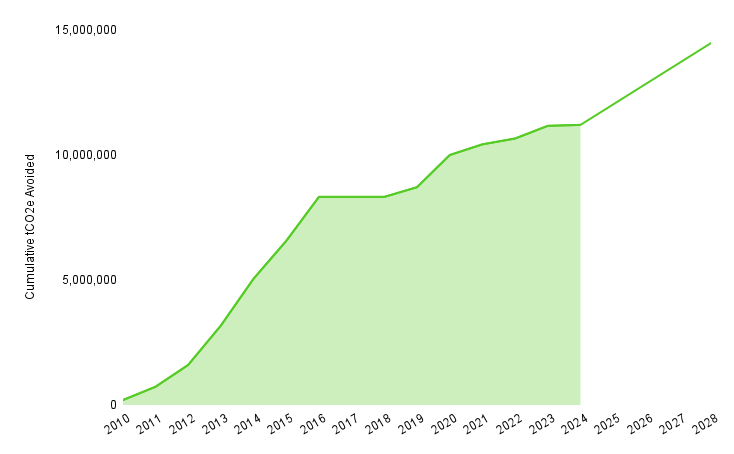
Figure shows the cumulative carbon dioxide emissions that this project avoided during both crediting periods, shaded in green. This project required carbon credit funding to build the infrastructure and install the equipment necessary for landfill gas capture and conversion to energy. Even though it stopped receiving credits in 2024, the landfill continues to produce methane and the project continues to capture and combust that methane, providing continuous climate benefits even today! Note: All data post 2024 is interpolated.
Beyond Carbon
Community and biodiversity co-benefits
The Istanbul Landfill Gas Project provides multiple community and environmental benefits.
Environment: This project significantly improves air quality by capturing and destroying harmful gases like hydrogen sulfide that cause odors and health issues. Environmental improvements include proper leachate management through collection systems and water treatment, preventing groundwater contamination. The site’s clay and soil covering will eventually support revegetation, creating potential for biodiversity restoration.
Community: This project also creates substantial employment opportunities, with priority given to local residents, helping to reduce unemployment and poverty in the region while providing valuable skills training in renewable energy technology. By generating electricity from waste, the project demonstrates technological innovation in Turkey’s energy sector while reducing dependence on imported fossil fuels. This serves as a model for similar sustainable energy initiatives throughout the country, potentially creating more green jobs and improving community health by reducing exposure to landfill pollutants.
Risk of Reversal
This project has no risk of reversal because its avoided emissions are not subject to being undone.
Registry & Verification
Registry
Gold Standard
Project ID
707
Project Location
Project data sourced from CNaught carbon marketplace. Information may be updated periodically.