Your cart is currently empty!
Delta Blue Carbon
Project Description
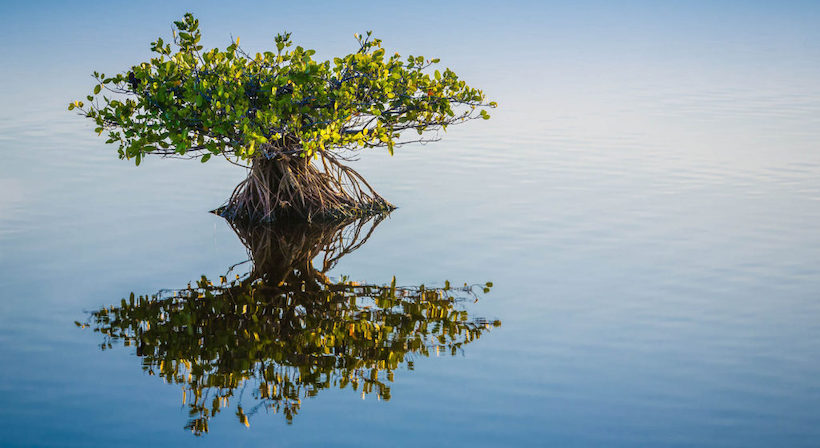
The Delta Blue Carbon project seeks to to restore degraded lands through large-scale mangrove reforestation on the Indus Delta in Pakistan. While the area was previously covered in mangroves, which sequester 3-5 times more CO2 per hectare than upland tropical forests, they largely disappeared by the 1980s. The project will ultimately plant mangroves on nearly 225,000 hectares of land and estimates that it will remove over 2.4 million tonnes of CO2e per year. This makes it the largest restoration program in the world. Despite inherent challenges involved in mangrove restoration projects, Delta Blue is also highly regarded, with Renoster stating that its “governance, design, and execution is well orchestrated and scientifically rigorous.”
Key Information
Developer
Government of Sindh, Forest Department & Indus Delta Capital Ltd.
Project Type
Reforestation
Impact Type
Removal
Permanence
100
Methodology
VM0033
Verifier
ICONTEC
Project Lifetime
2015 – 2075
Oxford Category
Oxford Type 4—Nature-based Removals
Due Diligence
CNaught maintains a very high quality standard for all projects in the portfolios we manage. To ensure that a project meets this standard, we perform due diligence that’s backed up by third-party ratings agencies’ independent due diligence.
Additionality:
This project has high additionality, meaning it is very unlikely that this project activity could have occurred in the absence of carbon funding. Prior to the project, the area’s original mangrove forests were cleared and drained to create grazing land for local livestock, which most likely would have continued without intervention. Mangrove restoration requires substantial upfront capital investment and generates minimal direct revenue, making it financially unfeasible without carbon funding. While Pakistan’s government has committed to mangrove restoration through its One Billion Trees initiative, the program lacks sufficient funding to achieve restoration at the scale Delta Blue has implemented1. This assessment of additionality has been independently verified by all four carbon rating agencies, each confirming the project’s strong additionality credentials.
Over-Crediting:
This project has a low risk of over-crediting, meaning that it is likely to have accurately accounted for the amount of carbon being removed from the atmosphere. We found that the project was conservative in their baseline estimation, which all four ratings agencies agree with. Generally, it is challenging to quantify removals from mangroves using satellite imagery, as the majority of those removals occur underground. However, we found that the project has a rigorous approach to sampling carbon throughout the project area and are confident that the amount of carbon being sequestered by the mangroves and soil is being accurately estimated.
Durability:
This project activity is highly durable, as its carbon removals will remain long after the project’s crediting period ends in 2075. The Sindh Forest Act was recently amended to make mangrove forests legally protected, which should prevent the Delta Blue mangroves from being deforested in the future2. It is also unlikely that the mangroves would be illegally deforested, as the project was designed in close collaboration with local communities, which increases the likelihood that the local community will protect the forest for decades to come3. Additionally, the project has planted a diverse array of native mangrove species, which should reduce the mangroves’ susceptibility to natural risks such as fire, disease, or insects4. While flooding is always a risk in coastal areas, mangroves are naturally resistant and are unlikely to be damaged by flooding. In fact, the newly restored mangroves should help protect not just themselves from storms and flooding, but also local communities and infrastructure5.
Double-Counting:
The project credits have a very low risk of being double counted. There are no regulatory obligations being met by the project activity and the project’s registry, Verra, has mechanisms in place to ensure that the project is not registered in any other programs.
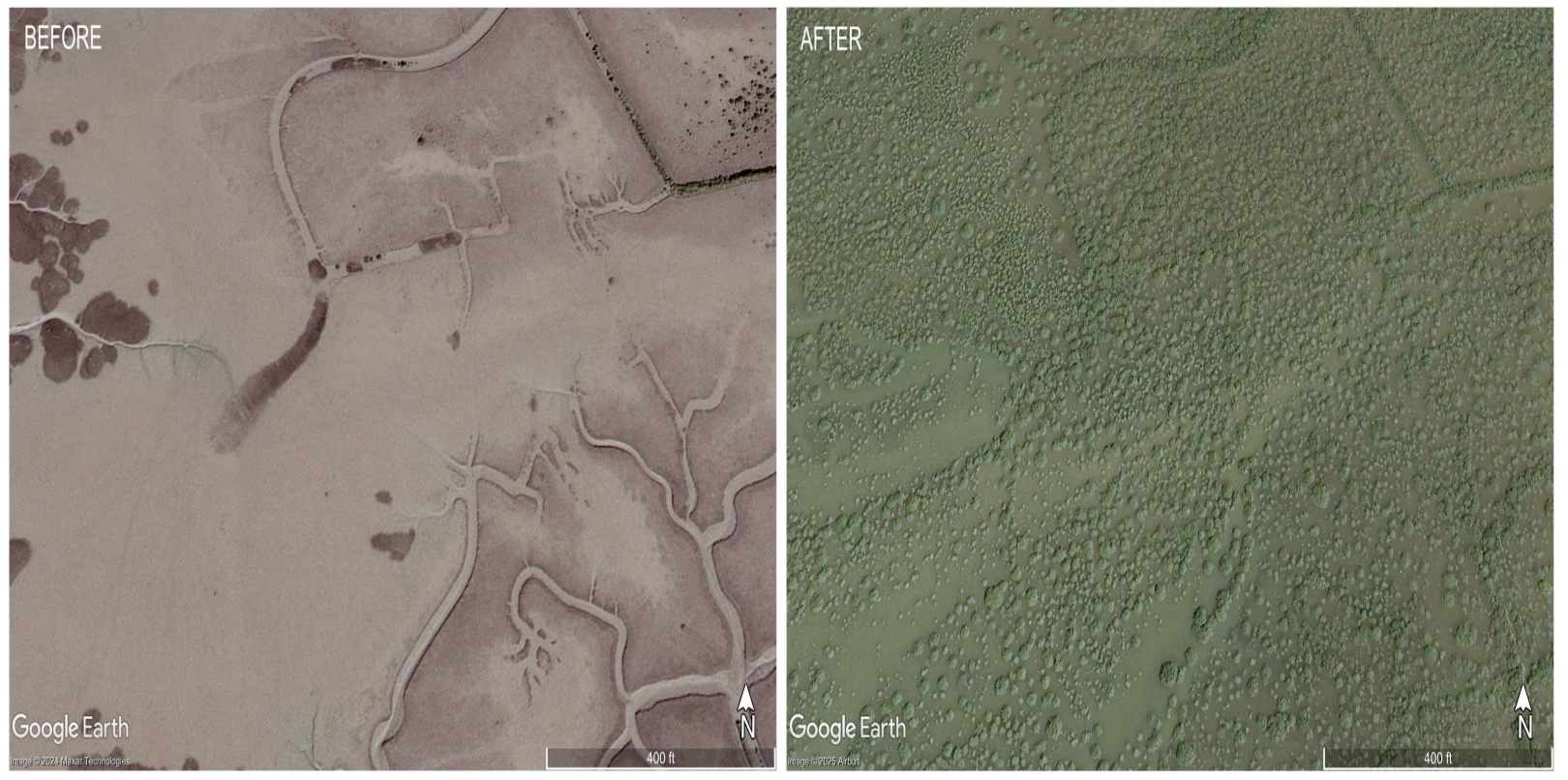
The images show what the project area looked like before Delta Blue Carbon began replanting mangroves and what the project area looks like today after the mangroves have had nearly ten years to grow. This project has transformed a highly degraded area into a healthy and thriving mangrove forest!
Beyond Carbon
Community and biodiversity co-benefits
This project delivers significant community, biodiversity, and environmental benefits.
Community: This project supports over 42,000 people in coastal communities through multiple initiatives including health services, education, and sustainable livelihoods. To date, it has upgraded seven healthcare centers, restored non-functional schools, and created 80 village organizations with equal gender representation. The project also provides economic opportunities through agricultural and fisheries training, microfinance access, and specialized training for 6,000 women in skills like crab farming and handicrafts, while improving water access through restored water treatment facilities.Biodiversity: This project creates and restores a critical coastal habitat that serves as a nursery ground for numerous marine species. The mangrove ecosystem supports a rich variety of wildlife including fish species, crustaceans, and coastal birds that depend on mangroves for breeding and feeding. The restored forests also create corridors for migratory birds and support complex food webs that maintain ecosystem balance.Environmental: This project strengthens coastal resilience by creating natural barriers against storm surges and coastal erosion. The restored mangrove ecosystem improves water quality through natural filtration and prevents salt water intrusion into coastal aquifers. The project’s extensive root systems enhance soil stability and help maintain the natural hydrological cycles of the coastal ecosystem.
Risk of Reversal
Nature-based projects like this one face some risk of reversal. Carbon storage may be affected by natural hazards such as wildfires, flooding, and escalating climate change impacts. Additionally, human-driven factors such as changes in land use or local governance structures can also impact carbon storage.
Registry & Verification
Third Party Labels
Project Location
Project data sourced from CNaught carbon marketplace. Information may be updated periodically.